Pap Smear in Korea: What Foreign Women in Daegu Need to Know
Free NHIS cervical screening every 2 years from age 20, results and follow-up
Medically reviewed by Dr. Yeo Jun-young, MD, PhD, board-certified OB-GYN · Last updated September 2026
Getting a Pap smear in Korea is simpler than many expats expect, but the rules on free screening, HPV testing, and insurance can be confusing. This guide explains who qualifies for free screening, how to book, what happens in the exam room, and what to do if your results come back abnormal.
Quick answer A Pap smear in Korea is free for women aged 20 and older once every 2 years if they are enrolled in the National Health Insurance Service (NHIS) under the National Cancer Screening Program. Foreigners not yet on NHIS can still be tested but pay out of pocket. HPV co-testing may be non-covered, so ask first. Abnormal results usually lead to a colposcopy.
What is a Pap smear, and how is it different from an HPV test?
A Pap smear (Pap test) is a screening test that collects cells from the cervix and checks them for abnormal changes. An HPV test uses a similar sample but looks for the high-risk types of human papillomavirus (HPV) that can cause those changes.
The American College of Obstetricians and Gynecologists (ACOG) describes both tests this way. Doing both at once is called co-testing.
Neither test diagnoses cancer; they show whether you need a closer look.
Is a Pap smear free in Korea for foreigners?
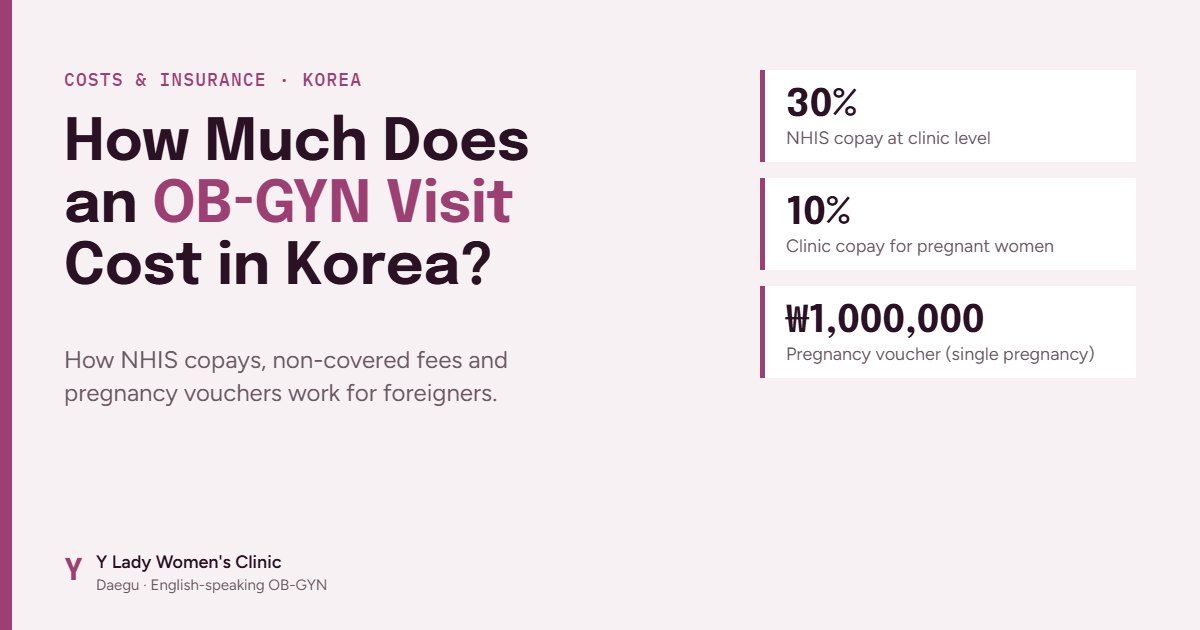
Yes, if you are enrolled in NHIS. Korea's National Cancer Screening Program offers cervical cancer screening with a Pap smear to women aged 20 and older every 2 years, and the cost of the screening itself is shared so the patient pays nothing, per NHIS.
Foreign residents qualify the same way Korean citizens do, as long as they are active NHIS subscribers or dependents.
Who is eligible for NHIS as a foreigner?
Most foreign employees are enrolled through their workplace. If you are not employed in Korea, the rules are stricter:
- Since April 3, 2024, foreigners generally must live in Korea for at least 6 months before joining NHIS as a regional subscriber or dependent (Korea.net).
- Exceptions exist for dependents on D-2, D-4-3, E-9, F-5, and F-6 visas, minors under 19, and foreign spouses of Korean citizens.
What if I'm not on NHIS yet?
You can still get a Pap smear in Korea without NHIS. You will simply pay as an uninsured patient. Costs vary by test type and clinic, so ask the clinic for an estimate before your appointment.
Is HPV testing covered in Korea?
HPV co-testing may not be covered under the national screening program. The free NHIS screening is built around the Pap smear; an HPV test added at your request may be billed as a non-covered (비급여) service, which the patient pays in full.
Coverage can depend on why the test is ordered. The safest approach:
- Tell the front desk you want a routine Pap smear under NHIS screening.
- Ask whether HPV testing is covered in your situation.
- Ask for a written estimate for anything non-covered.
How do I book a Pap smear at an OB-GYN in Daegu?
Booking a Pap smear with an English-speaking OB-GYN in Daegu usually takes one message. At Y Lady Women's Clinic, you can text us in English on WhatsApp at +82-10-7776-1053, and online inquiries are answered within 24 hours (except Sundays and public holidays).
When you message, include:
- Your name as shown on your Alien Registration Card (ARC)
- Whether you have NHIS coverage
- The date of your last Pap smear, if you know it
- Any symptoms, such as unusual bleeding or discharge
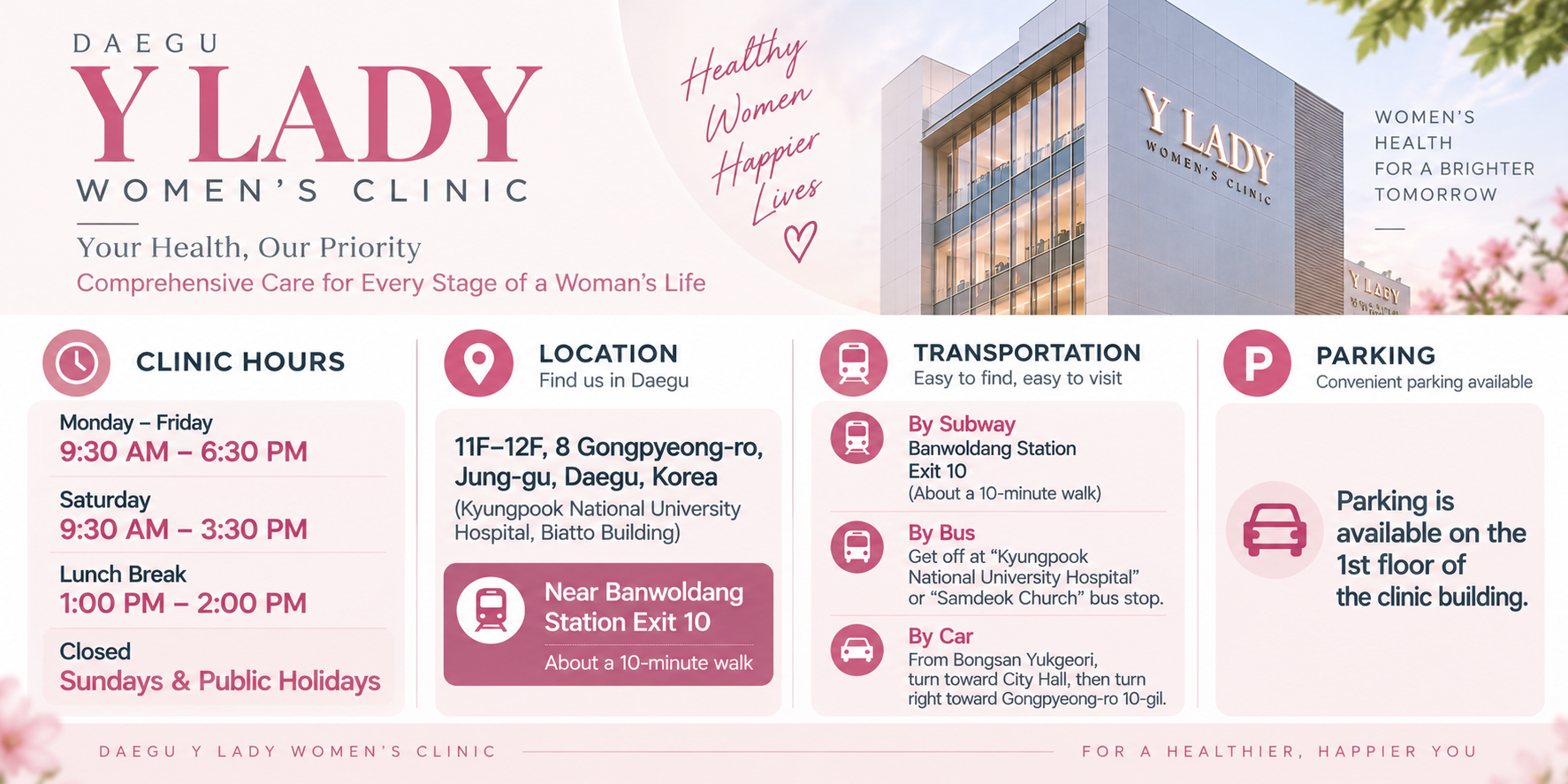
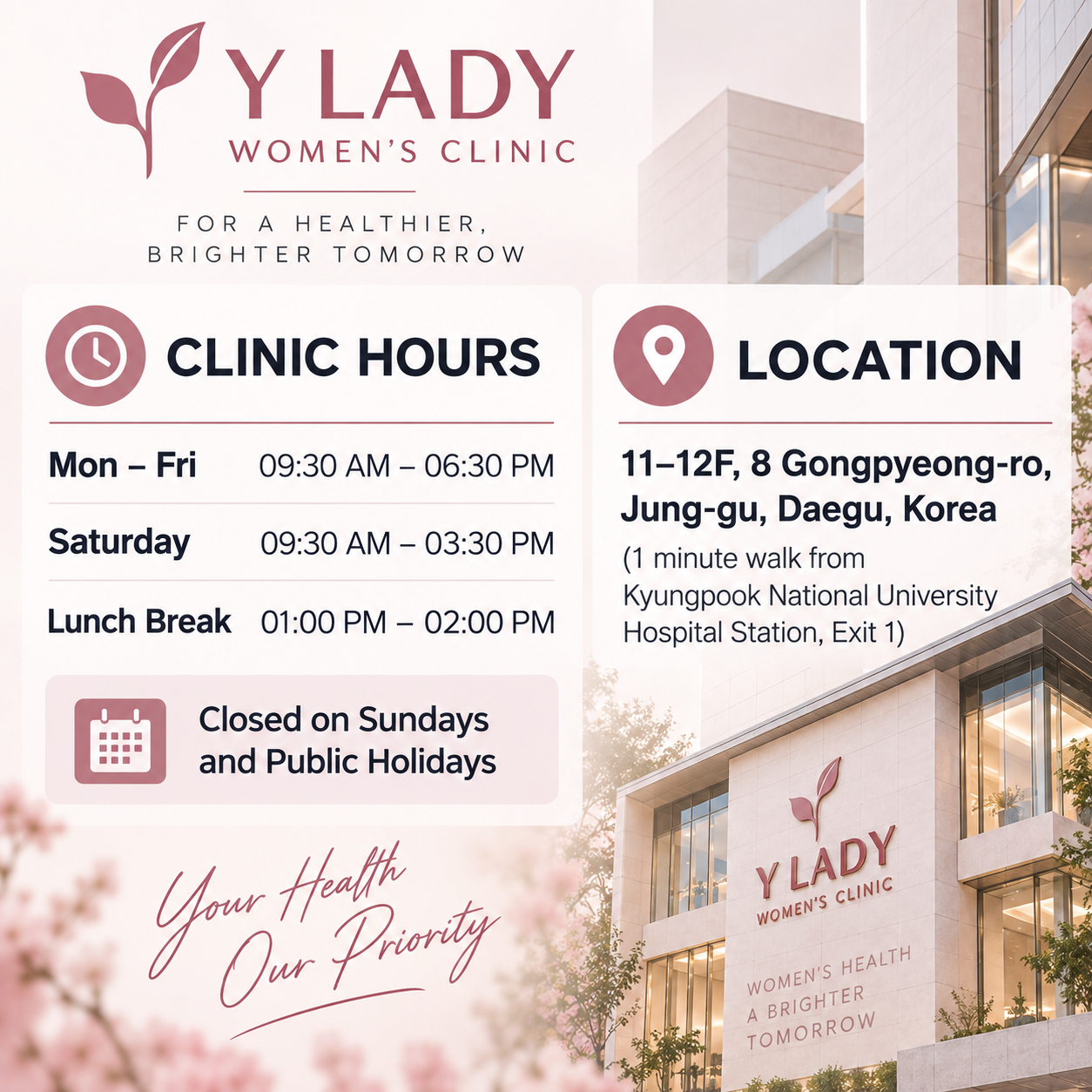
Clinic hours are Monday to Friday 09:30–18:30 and Saturday 09:30–15:30, with lunch from 13:00 to 14:00. We are closed on Sundays and public holidays.
How should I prepare for a Pap smear?
Preparation is simple: avoid anything that could wash away or hide cervical cells for 2 days before the test. ACOG advises avoiding douching, sexual intercourse, and vaginal medications or hygiene products for 2 days beforehand.
Other tips:
- Timing: ACOG notes you can be screened during your period, but it is best to schedule at another time.
- Bring: your ARC or passport, and any previous results from home if you have them.
- Tell the doctor: if you might be pregnant or have had abnormal results before.
What happens during a Pap smear in Korea?
A Pap smear is a short, in-office procedure; the sample itself usually takes only a few minutes. Here is what to expect at most gynecology clinics in Korea:
- Check-in: the front desk confirms your ID and insurance status; you may fill in a short health form.
- Consultation: the doctor asks about your cycle, symptoms, and screening history.
- Changing: you change into a gown or skirt wrap in private.
- The exam chair: Korean clinics typically use a gynecology chair with leg supports.
- Sample collection: the doctor inserts a speculum and gently collects cervical cells with a small brush.
- Done: you can return to normal activities right away.
Some women feel mild pressure or brief cramping, and light spotting can happen. At Y Lady, all three doctors are female, board-certified OB-GYNs.
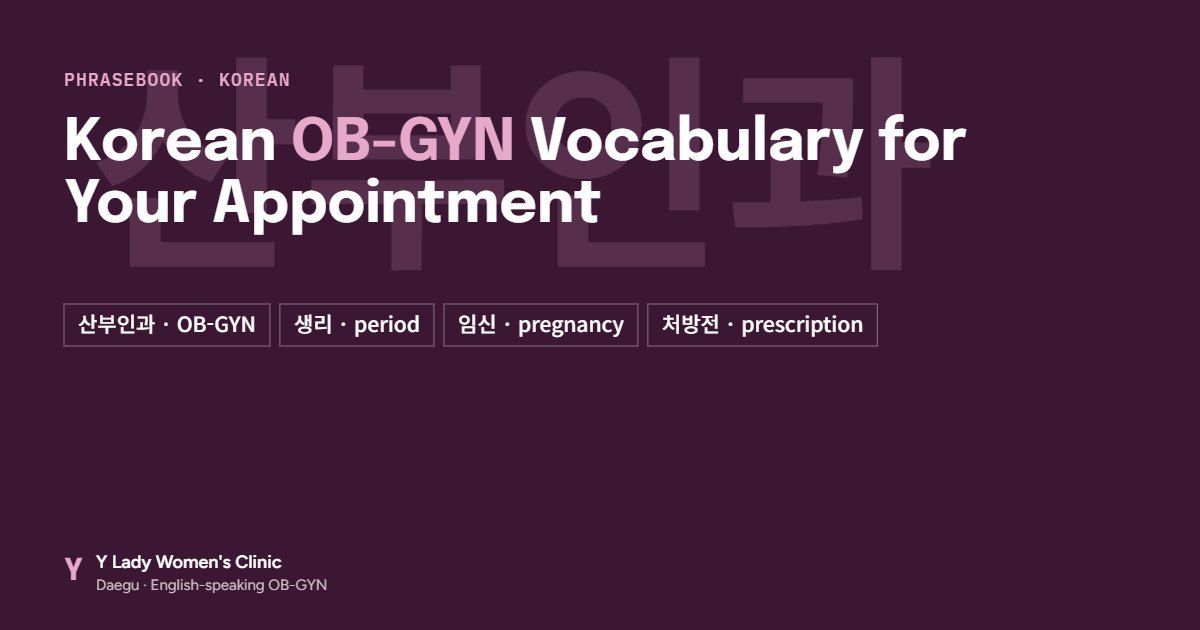
Useful Korean words to show staff
- Pap smear / cervical cancer screening — Korean: 자궁경부암 검사
- National health screening — Korean: 국가건강검진
- HPV test — Korean: HPV 검사
- Receipt / itemized bill — Korean: 영수증 / 진료비 세부내역서
How long do Pap smear results take, and what do abnormal results mean?
Results are not immediate because the sample goes to a laboratory; your clinic will tell you when to expect them. You can ask for an English copy for your records.
An abnormal result does not mean you have cancer. ACOG notes that cervical cell changes often go back to normal on their own. Your doctor will recommend next steps based on the type of change found.
Normal vs. abnormal: what usually happens next
- Normal — What it generally means: No abnormal cells found; Typical next step: Routine rescreening (NHIS: every 2 years from age 20)
- Unclear or mildly abnormal — What it generally means: Minor changes, often temporary; Typical next step: Repeat testing or HPV testing, as your doctor advises
- Abnormal, higher concern — What it generally means: Changes that need a closer look; Typical next step: Colposcopy, possibly with biopsy
What is a colposcopy?
A colposcopy is an exam that uses a magnifying instrument to look closely at the cervix after an abnormal screening result. If an area looks unusual, the doctor may take a small tissue sample (biopsy). ACOG describes colposcopy and biopsy as the usual follow-up tests, and, if high-grade changes are confirmed, treatment such as LEEP to remove abnormal cells.
Y Lady offers colposcopy in Daegu on-site, so most follow-up can happen at the same clinic where you had your Pap smear.
Should adult women get the Gardasil vaccine in Korea?
Adults can get Gardasil 9 in Korea, but they usually pay out of pocket. Korea's National Immunization Program covers adolescent girls at age 12 and expanded to 12-year-old boys from May 2026; adult doses are generally non-covered.
The U.S. Centers for Disease Control and Prevention (CDC) recommends catch-up vaccination through age 26. Some adults aged 27 to 45 may choose it after talking with their doctor, though the benefit is lower because many have already been exposed to HPV.
Vaccination does not replace screening. You still need regular Pap smears even if you have had Gardasil. Learn more about the Gardasil 9 vaccine in Daegu.
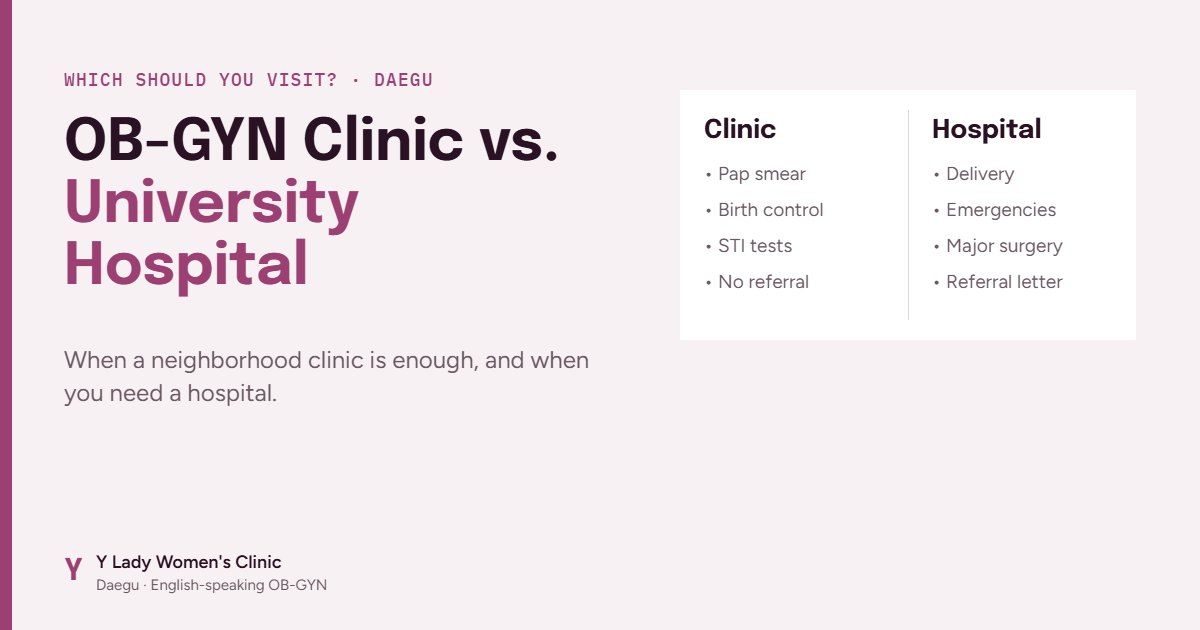
Should I go to a clinic or a university hospital for a Pap smear in Daegu?
For routine screening, a local gynecologist in Daegu is usually the most convenient choice. University hospitals are better suited to complex cases, and in Korea's referral system patients usually need a referral letter (진료의뢰서) from a clinic to be seen at a tertiary hospital at NHIS rates.
- Best for — Local OB-GYN clinic (의원): Routine screening, colposcopy; University hospital: Complex cases
- Referral needed — Local OB-GYN clinic (의원): No; University hospital: Usually, for NHIS rates
- English support — Local OB-GYN clinic (의원): Varies; ask ahead; University hospital: International centers at some
In Daegu, Keimyung University Dongsan Medical Center, Yeungnam University Medical Center, and Daegu Fatima Hospital list international medical centers. Confirm details with each hospital before visiting.
Foreigner checklist: before, during, and after your visit
A little planning makes the visit easier. Here is what an OB-GYN for foreigners would suggest:
- Before: confirm NHIS status and message the clinic on WhatsApp.
- Getting here: Y Lady is at 2F, 11-1 Gongpyeong-ro 8-gil, Jung-gu, Daegu, opposite Samdeok Fire Station. For taxis, show: 대구광역시 중구 공평로8길 11-1 2층. The nearest metro stops are Kyungpook Nat'l Univ. Hospital Station (Line 3) and Banwoldang Station (Lines 1 & 2).
- After: ask for an itemized receipt (진료비 세부내역서) and an English copy of your results if you plan to claim with travel or overseas insurance.
Frequently asked questions
How often should I get a Pap smear in Korea?
Korea's national program offers a Pap smear every 2 years to NHIS-enrolled women aged 20 and older. Your doctor may recommend a different schedule after abnormal results.
Can I get a Pap smear in Korea without insurance?
Yes. You can be screened without NHIS and pay as an uninsured patient. Ask the clinic for an estimate before your visit so there are no surprises.
Does a Pap smear hurt?
Most women feel pressure or mild discomfort, and the sample takes only minutes. Tell the doctor if you feel uncomfortable so they can adjust.
Can I get a Pap smear during my period?
You can, but it is better to schedule it for another time, according to ACOG. If your period starts unexpectedly, message the clinic to ask whether to reschedule.
Is there an English-speaking OB-GYN in Daegu for Pap smears?
Yes. Y Lady Women's Clinic in Jung-gu communicates in English by WhatsApp and text. Message us to book.
Do I still need Pap smears if I had the HPV vaccine?
Yes. The vaccine does not protect against every cancer-causing HPV type, and it does not treat an existing infection. Regular screening is still recommended.
Key takeaways
- NHIS subscribers aged 20+ can get a free Pap smear every 2 years under Korea's National Cancer Screening Program.
- Foreigners not yet on NHIS can still be screened but pay out of pocket; ask for an estimate.
- HPV co-testing may be non-covered, so confirm before your visit.
- Avoid intercourse, douching, and vaginal products for 2 days before the test.
- An abnormal result is not a cancer diagnosis; the usual next step is repeat testing or a colposcopy.
- Adults can get Gardasil 9, usually at their own cost, but still need regular screening.
Book your Pap smear in Daegu
If you are looking for a gynecologist in Daegu who can explain your options in English, our team at Y Lady Women's Clinic is happy to help. Message us on WhatsApp with your questions, and meet our female medical team before you visit.
Sources
- ACOG, Cervical Cancer Screening FAQ
- National Cancer Screening Program in Korea (J Prev Med Public Health)
- NHIS (English)
- Korea.net, NHIS 6-month residency rule for foreigners
- CDC, HPV Vaccine
- Korea Biomedical Review, HPV vaccine expansion to boys
- Daegu Metropolitan City, hospitals with international services