Giving Birth in Daegu as a Foreigner: Hospitals, Costs, and Paperwork
Hospitals, costs under NHIS, paperwork for your baby, and postpartum care
Medically reviewed by Dr. Yeo Jun-young, MD, PhD, board-certified OB-GYN · Last updated September 2026
Planning to give birth in Daegu as a foreigner? This guide walks you through choosing a hospital, what NHIS covers, what to pack, and the paperwork your baby needs after birth. It's written for expat parents who want clear, practical steps.
Quick answer Giving birth in Daegu as a foreigner means choosing a hospital with a labor and delivery unit, ideally one with an international center or English-speaking staff. With NHIS, covered delivery costs, vaginal or C-section, have a 0% copay since January 1, 2025. After birth, get a Korean and English birth certificate, register with your embassy, and register your baby with immigration within 90 days.
Where can foreigners give birth in Daegu?
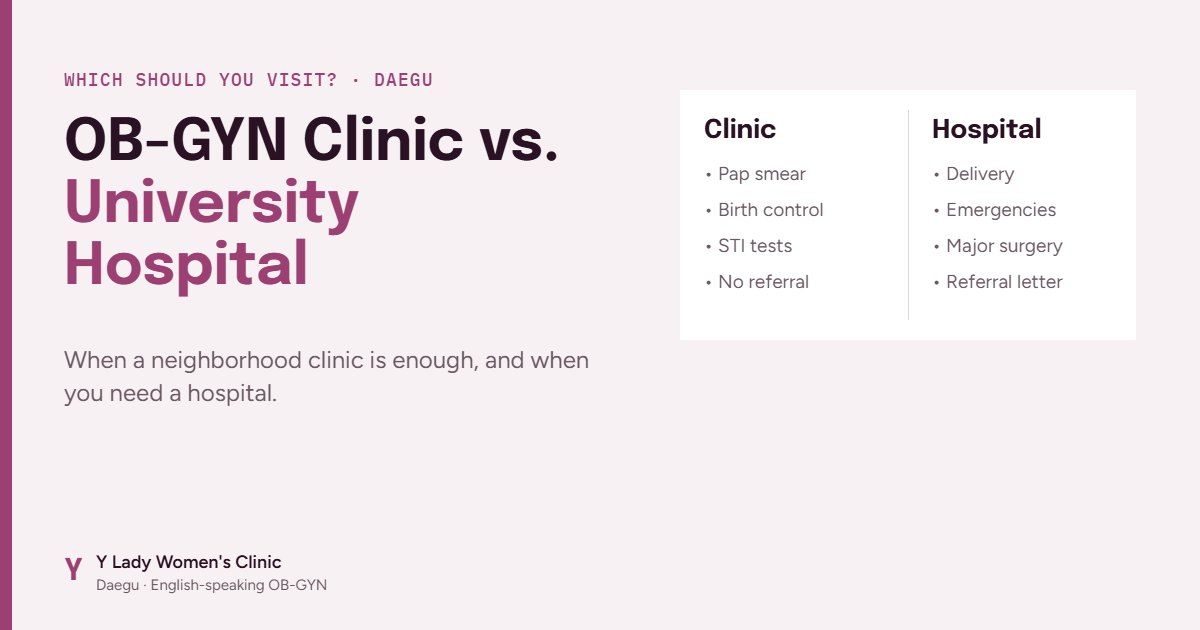
You can give birth at a hospital or women's hospital with a labor and delivery unit. Smaller OB-GYN clinics, including Y Lady Women's Clinic, often don't deliver babies. Y Lady does not deliver babies or have a maternity ward.
What we can do is confirm your pregnancy early and provide gynecological care before and after. For the birth itself, you'll need a delivering hospital.
Which Daegu hospitals have international support?
Daegu Metropolitan City lists these hospitals as offering international services or English-speaking staff. Always confirm that the hospital's obstetrics department fits your needs and that language support covers the labor ward, not just the front desk.
- Keimyung University Dongsan Medical Center — Foreigner support listed: International Medical Center
- Yeungnam University Medical Center — Foreigner support listed: International Health Service Center
- Daegu Fatima Hospital — Foreigner support listed: International Medical Center
- Kyungpook National University Hospital — Foreigner support listed: Designated English-speaking staff (no international center)
- Daegu Catholic University Medical Center — Foreigner support listed: English-speaking staff available
Should I choose a women's hospital or a university hospital?
It depends on your pregnancy. Women's hospitals often suit routine pregnancies, while university hospitals are usually the better fit for higher-risk pregnancies or complex medical needs.
- Best for — Women's hospital: Routine, low-risk births; University/general hospital: Higher-risk pregnancies, complex care
- English support — Women's hospital: Varies; ask directly; University/general hospital: Some Daegu hospitals have international centers
- Referral letter — Women's hospital: Usually not needed; University/general hospital: Often needed at tertiary hospitals to pay NHIS rates
- Specialist backup on site — Women's hospital: Varies; University/general hospital: Usually broad specialist teams
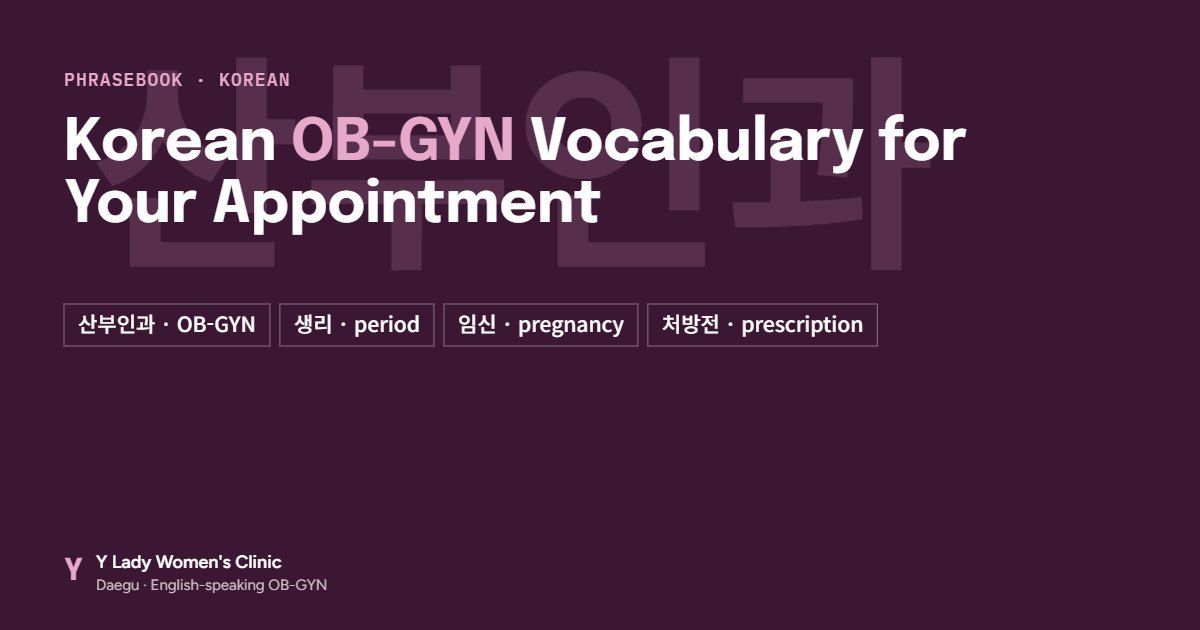
At tertiary (상급종합) hospitals, you'll usually need a referral letter (진료의뢰서) from a clinic to be charged NHIS rates. Without it, you may pay more. Any OB-GYN clinic, including ours, can write one.
What should I ask when choosing a hospital?
Ask these questions before your first prenatal visit there:
- Is English support available during labor, including nights and weekends?
- Can my partner stay with me during labor and after the birth?
- Which delivery options do you offer, and how do you handle emergencies?
- What's included in the hospital stay, and what's non-covered (비급여)?
- Will you issue the birth certificate in both Korean and English?
How much does it cost to give birth in Daegu?
Your cost depends on NHIS enrollment and which services are covered. We don't list prices because they vary widely by hospital, room type, and extras. Ask your hospital for a written estimate.
Here's how delivery costs are structured for NHIS members:
- Covered vaginal delivery items — What you pay (NHIS member): 0%
- Covered C-section items — What you pay (NHIS member): 0% since Jan 1, 2025 (down from 5%)
- Non-covered items (e.g., some room upgrades or extras) — What you pay (NHIS member): 100%
- Without NHIS enrollment — What you pay (NHIS member): 100% of all costs
Does NHIS cover childbirth for foreigners?
Yes, if you're enrolled. Foreigners in NHIS get the same delivery coverage as Korean members.
Most foreigners must live in Korea for 6 months before joining NHIS as a regional subscriber or dependent, a rule in place since April 3, 2024. Exceptions include dependents on D-2, D-4-3, E-9, F-5, and F-6 visas, minors under 19, and foreign spouses of Koreans. Employees are enrolled through their workplace.
Can I use the National Happiness Card for the birth?
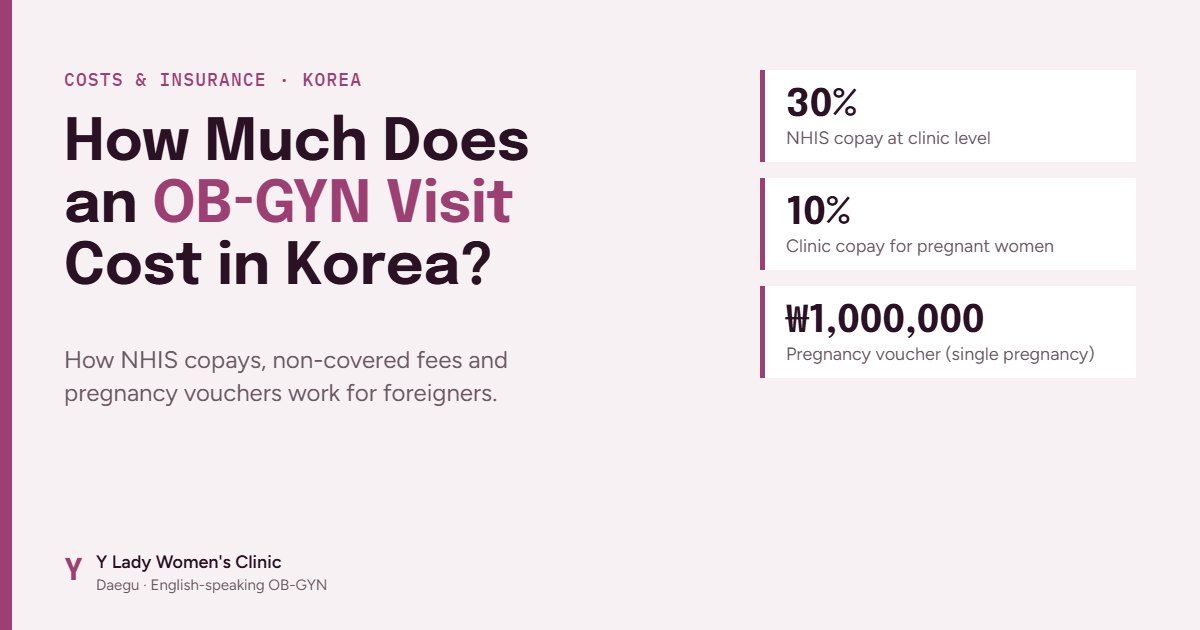
Yes. The National Happiness Card (국민행복카드) voucher can help with pregnancy and childbirth medical costs. As of 2026, it's KRW 1,000,000 for a single pregnancy and KRW 1,400,000 for multiples, with KRW 200,000 extra in underserved areas. It's for NHIS subscribers and dependents with a confirmed pregnancy.
What should I pack for the hospital?
Pack documents first, then comfort items. Hospitals differ in what they provide, so ask for their list.
Documents
- Passport and Alien Registration Card (ARC)
- NHIS card or number
- Maternal handbook (산모수첩)
- National Happiness Card
- Your hospital's registration or admission papers
For you
- Comfortable clothes, socks, and slippers
- Toiletries and a phone charger
- Nursing bras and pads
- Snacks and a water bottle with a straw
For your baby
- Going-home outfit and a blanket
- An infant car seat, if you're driving home
Save your hospital's address in Korean, and keep 119 on hand. The 119 emergency service offers English interpretation.
What paperwork does my baby need after birth?
Your baby needs a birth certificate, then registration with the right authorities. The steps depend on whether either parent is Korean.
How do I get a birth certificate in English?
The hospital issues the birth certificate (출생증명서). Ask for both Korean and English copies before you're discharged. You'll need them for your embassy, immigration, and insurance.
What if both parents are foreigners?
Babies of two foreign parents don't get a Korean resident registration number automatically. Follow these steps:
- Get the birth certificate in Korean and English from the hospital.
- Register the birth with your embassy. Each country has its own process and document list (for example, U.S. citizens apply for a Consular Report of Birth Abroad). Most embassies are in Seoul, so check whether your embassy needs an in-person visit.
- Apply for your baby's passport through your embassy.
- Register your baby with Korean immigration within 90 days of birth. Article 23 of the Immigration Act requires a foreign child born in Korea to obtain a status of stay within 90 days. Missing the deadline can lead to penalties.
Call the Immigration Contact Center at 1345 to confirm documents and book a visit.
What if one parent is Korean?
If one parent is Korean, the birth is reported to the local gu office or community center under Korea's family registration system. Korean law requires birth reports within one month of the birth.
A foreign parent living in Korea can also file the report, according to local government guidance. Check the required documents with your gu office before you go.
How do I add my baby to NHIS?
Ask NHIS to add your baby as a dependent once the baby's registration is complete. Minors under 19 are among the exceptions to the 6-month waiting rule, but confirm details with NHIS for your visa type.
What is a postpartum care center (sanhujoriwon)?
A postpartum care center (산후조리원, sanhujoriwon) is a private facility where new mothers rest and recover for a period after leaving the hospital. They're common in Korea, and services vary, so ask each center what's included.
Costs vary widely by center, room type, and length of stay, so ask for current pricing directly. Popular centers can fill up early, so start looking during your pregnancy. Ask whether staff can communicate in English.
When should I call 119 after giving birth?
Call 119 right away for serious symptoms after birth. The U.S. Centers for Disease Control and Prevention (CDC) lists urgent warning signs up to a year after delivery, including:
- Heavy vaginal bleeding
- A fever of 100.4°F (38°C) or higher
- Trouble breathing or chest pain
- Severe headache or vision changes
- Swelling, pain, or tenderness in one leg
- Thoughts of harming yourself or your baby
How can a gynecologist in Daegu help after the birth?
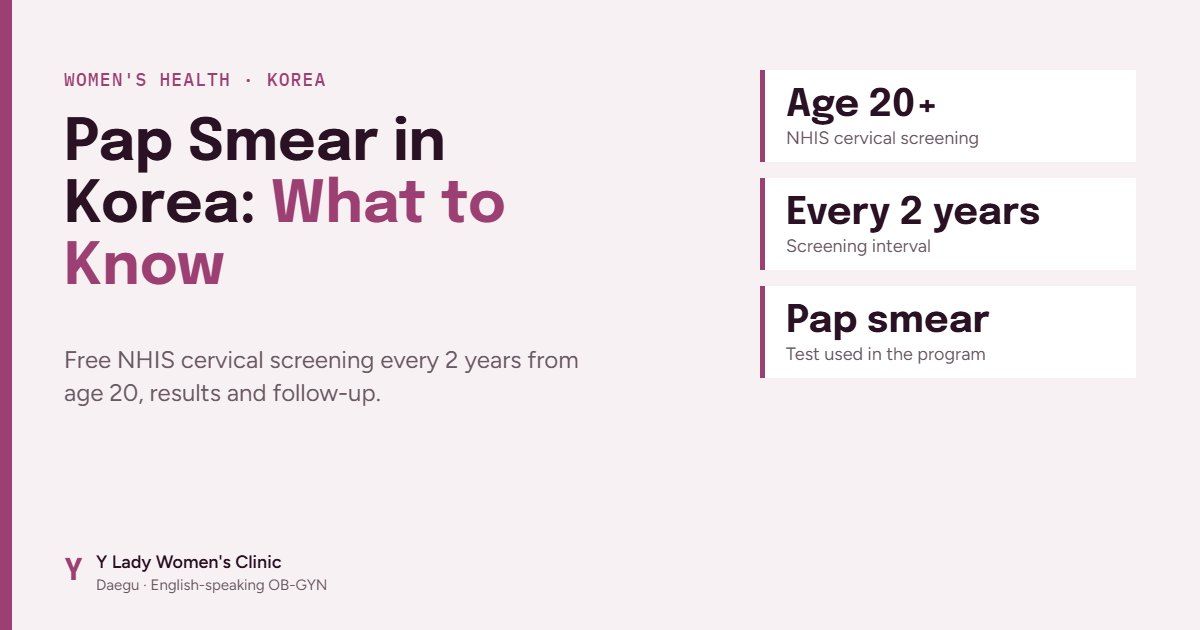
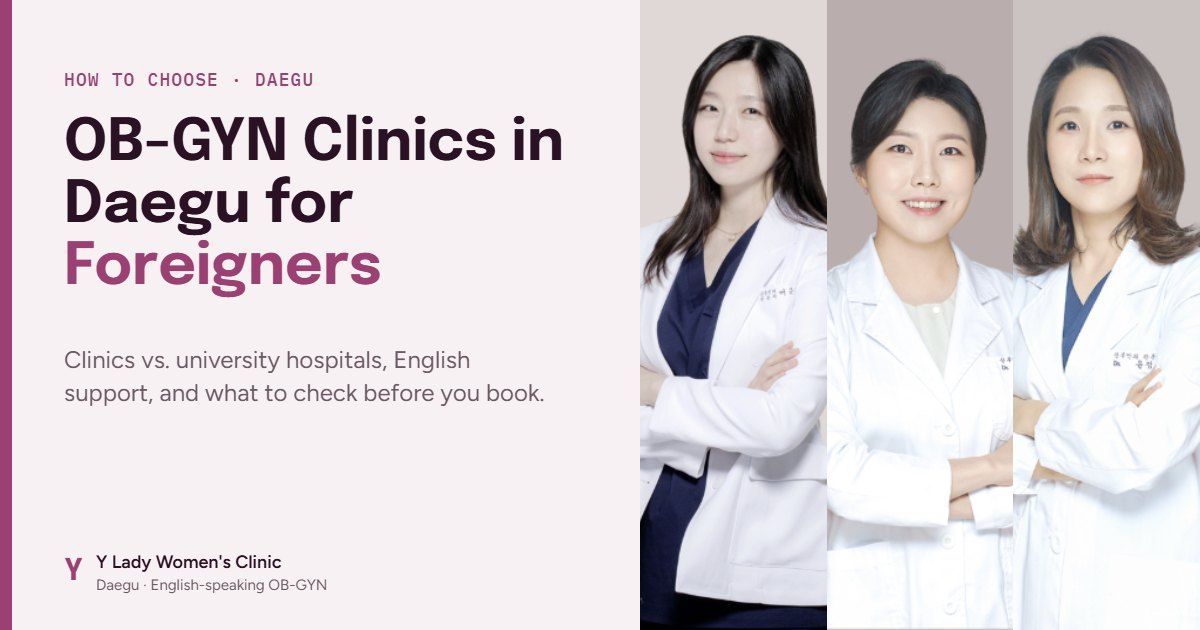
A gynecologist can help with care after the hospital stay. At Y Lady Women's Clinic, our three female, board-certified OB-GYNs offer gynecological checkups, Pap smears, and birth control counseling, including IUDs and Implanon. English support is available by WhatsApp.
Frequently asked questions
Can foreigners give birth in Korea? Yes. Foreigners can give birth at any Korean hospital with a delivery unit. With NHIS, covered delivery costs have a 0% copay.
Does Y Lady Women's Clinic deliver babies? No. Y Lady does not deliver babies or have a maternity ward. We provide pregnancy confirmation and gynecological care, and we can write a referral letter to a delivering hospital.
Is a C-section free in Korea? For NHIS members, covered C-section items have a 0% copay since January 1, 2025. Non-covered items are still paid out of pocket. Ask your hospital for an estimate.
How long do I have to register my baby with immigration? If both parents are foreigners, register your baby within 90 days of birth. Call 1345 to confirm the documents you need.
Will my baby get Korean citizenship if born in Korea? Not automatically, if both parents are foreigners. Babies of two foreign parents don't receive a Korean resident registration number. Register the birth with your embassy.
Which Daegu hospitals have English-speaking staff? Daegu Metropolitan City lists Keimyung University Dongsan Medical Center, Yeungnam University Medical Center, Daegu Fatima Hospital, Kyungpook National University Hospital, and Daegu Catholic University Medical Center. Confirm support for obstetrics before booking.
Are postpartum care centers expensive? Prices vary widely by center and room. Ask each center for current rates.
Key takeaways
- Choose a Daegu hospital with a labor and delivery unit early; confirm English support covers the labor ward.
- Y Lady Women's Clinic does not deliver babies, but it can confirm pregnancy, write referrals, and provide gynecological care.
- Covered delivery costs, vaginal or C-section, have a 0% copay for NHIS members since January 1, 2025.
- Get the birth certificate in Korean and English before discharge.
- Two foreign parents: register with your embassy, then with immigration within 90 days.
- One Korean parent: report the birth within one month.
Talk to us
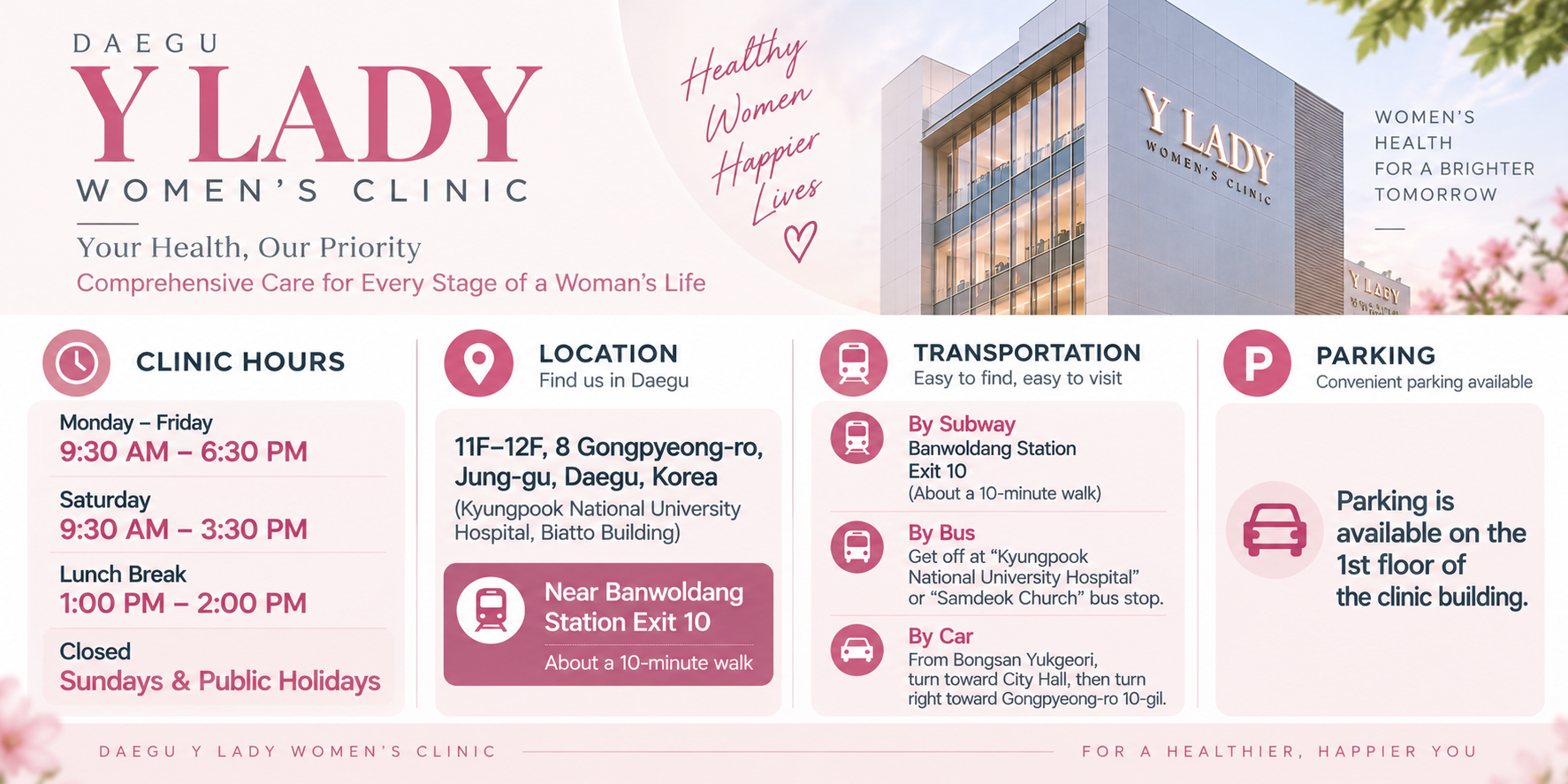
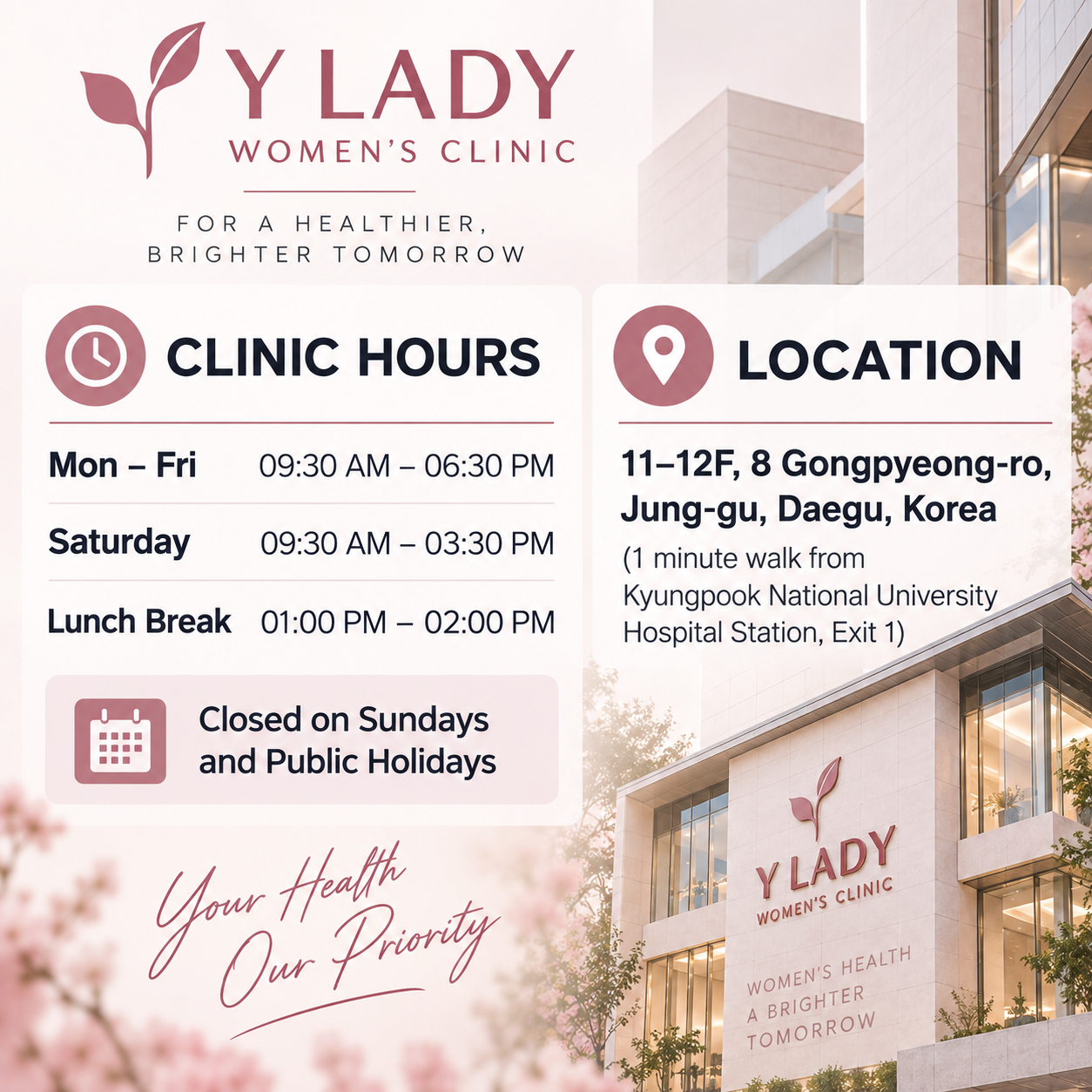
Need a pregnancy test, a referral letter, or an English-speaking OB-GYN in Daegu? Y Lady Women's Clinic is in Jung-gu, opposite Samdeok Fire Station, near Kyungpook Nat'l Univ. Hospital Station (Line 3) and Banwoldang Station (Lines 1 and 2). For taxis: 대구광역시 중구 공평로8길 11-1 2층. Message us on WhatsApp.
Sources
- National Health Insurance Service (NHIS), English site
- Korea.net, NHIS 6-month rule for foreigners
- Daegu Metropolitan City, hospitals for foreigners
- Immigration Act, Article 23 (Gwangjin-gu Office summary)
- Family Relationship Registration Act, Article 44 (Korea Legislation Research Institute)
- Seongbuk-gu Office, Birth registration
- CDC, Urgent Maternal Warning Signs