How Much Does an OB-GYN Visit Cost in Korea? A Guide for Foreigners in Daegu
How NHIS copays, non-covered fees and pregnancy vouchers work for foreigners
Medically reviewed by Dr. Yeo Jun-young, MD, PhD, board-certified OB-GYN · Last updated September 2026
If you're a foreigner planning to see a gynecologist in Daegu, the price depends less on the clinic and more on how Korea's insurance system treats your visit. This guide explains how OB-GYN visit costs in Korea are structured, so you know what to ask before you pay.
Quick answerThe cost of an OB-GYN visit in Korea depends on your insurance and the service. With National Health Insurance (NHIS), you pay 30% of covered costs at a clinic, or 10% if you're pregnant. Non-covered services (비급여) are paid 100% by you. Without NHIS, you pay the full price. Ask the clinic for an estimate before tests or procedures.
How are OB-GYN visit costs calculated in Korea?
OB-GYN visit costs in Korea are calculated in two parts: covered services, where NHIS pays most of the cost, and non-covered services, which you pay in full. Your final bill is the sum of your share of covered items plus any non-covered items.
That's why two patients at the same OB-GYN in Daegu can pay very different amounts. One may have a consultation and a covered test. Another may add a non-covered vaccine or procedure.
What does "covered" mean?
A covered service (급여) is one that NHIS includes in its benefits. For covered care at a clinic (의원), the patient's outpatient copay is 30% of the cost, according to the NHIS English site.
What does "non-covered" (비급여) mean?
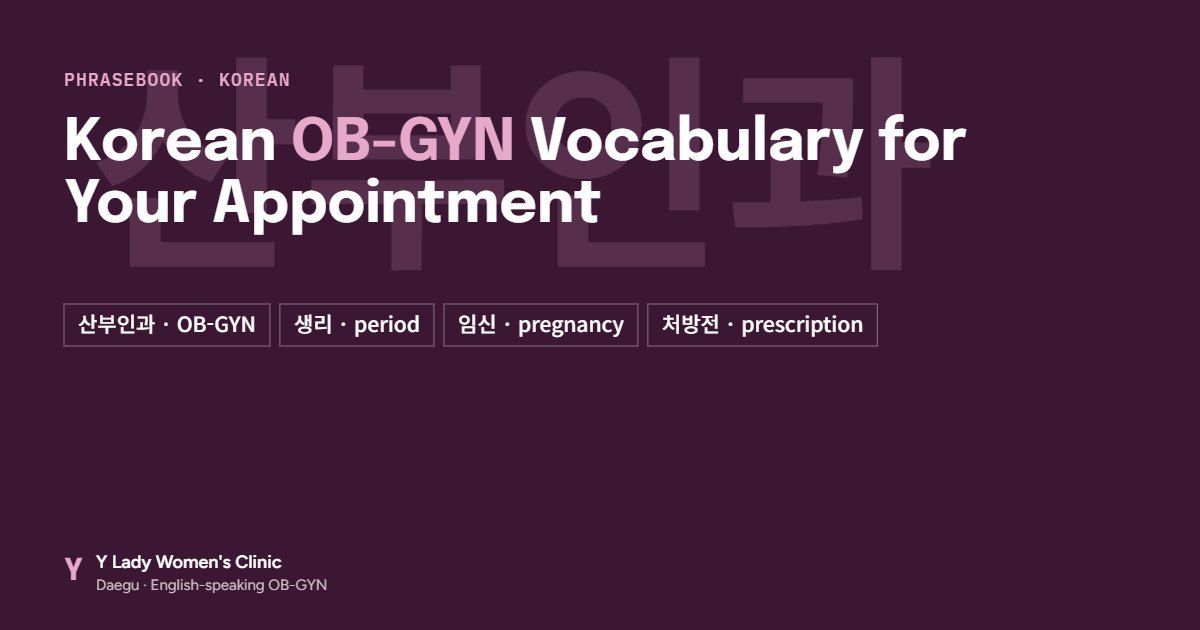
A non-covered service (비급여) is one NHIS does not pay for, so the patient pays 100%. Clinics set their own prices for these items, which is why they vary between clinics.
In Korea, clinics are expected to post their non-covered fee schedule (비급여수가표). Y Lady Women's Clinic has a posted fee schedule, and you can ask the front desk to show you the relevant items before you agree to anything.
Covered vs. non-covered at a glance
- Who sets the price? — Covered (급여): National fee schedule; Non-covered (비급여): Each clinic
- Your share at a clinic (with NHIS) — Covered (급여): 30%; Non-covered (비급여): 100%
- Your share if pregnant (clinic, with NHIS) — Covered (급여): 10%; Non-covered (비급여): 100%
- Your share without NHIS — Covered (급여): 100%; Non-covered (비급여): 100%
- Where to check the price — Covered (급여): Ask the clinic for an estimate; Non-covered (비급여): Clinic's posted fee schedule (비급여수가표)
How much do foreigners with NHIS pay at an OB-GYN clinic?
Foreigners enrolled in NHIS pay the same copay as Korean citizens: 30% of covered costs at a clinic, plus the full price of any non-covered items.
To use NHIS, bring photo ID. Since May 20, 2024, patients must verify their identity with an ID such as an Alien Registration Card (ARC) or passport for insurance to apply (Korea JoongAng Daily). If you forget your ID, you may pay the full amount but can bring your ID and receipt back within 14 days for a refund of the insured portion.
Why does my bill differ from my friend's?
Your bill depends on what happens during the visit. A consultation alone costs less than a consultation plus ultrasound, lab work, or a procedure. Whether each item is covered also depends on the medical reason it was done, so the doctor or front desk is the best source for your specific situation.
How much does an OB-GYN visit cost without insurance in Korea?
Without NHIS, you pay the full price of every service, covered and non-covered. There's no copay discount.
This most often affects:
- New arrivals. Since April 3, 2024, most foreigners must live in Korea for at least 6 months before joining NHIS as regional subscribers or dependents (Korea.net).
- Short-term visitors and tourists.
- People between jobs whose coverage has lapsed.
There are exceptions to the 6-month rule, including some dependents on D-2, D-4-3, E-9, F-5, and F-6 visas, minors under 19, and foreign spouses of Koreans. People who work for a Korean employer are generally enrolled through the workplace.
If you're uninsured, tell the clinic when you book. Ask for an estimate for any test or procedure, and keep every receipt for a possible private insurance claim.
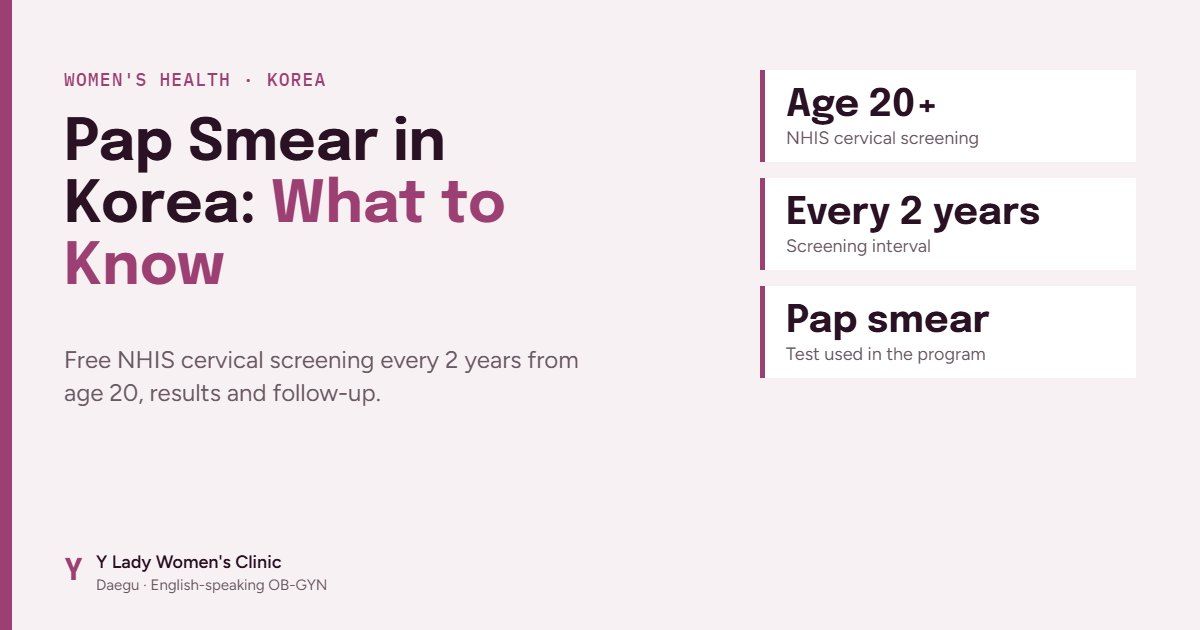
Is a Pap smear free in Korea?
Yes, for eligible women the cervical cancer screening Pap smear is free under NHIS. The National Cancer Screening Program offers cervical screening to women aged 20 and older every 2 years, and the patient pays nothing for the screening itself (J Prev Med Public Health).
A few things to know:
- The free screening applies to the screening test. If you need follow-up care, such as colposcopy, other costs may apply.
- Eligibility follows the national program schedule, so check whether you're due this cycle.
- If you're not enrolled in NHIS, the free program doesn't apply.
Learn more about Pap smears and colposcopy in Daegu.
How much does pregnancy care cost in Korea?
Pregnancy care in Korea costs less for NHIS members because of two supports: a lower copay and a pregnancy voucher. Exact amounts depend on your visits and tests.
What is the pregnant-women copay?
Pregnant women with NHIS pay a reduced outpatient copay of 10% at the clinic (의원) level for covered services. Bring proof of pregnancy or your maternal handbook (산모수첩) so the clinic can apply it.
How much is the pregnancy voucher?
The pregnancy and childbirth voucher, loaded onto the National Happiness Card (국민행복카드), is:
- Single pregnancy — Voucher amount (as of 2026): KRW 1,000,000
- Multiple pregnancy — Voucher amount (as of 2026): KRW 1,400,000
- Underserved (medically vulnerable) areas — Voucher amount (as of 2026): Extra KRW 200,000
The voucher is for NHIS subscribers and dependents with a confirmed pregnancy. It can help pay pregnancy- and childbirth-related medical costs. Ask your clinic whether you can use it there.
How much does a C-section cost with NHIS?
Since January 1, 2025, the copay for covered C-section costs is 0%, the same as a vaginal delivery. Non-covered items, such as a private room or extras, are still paid by you.
Please note that Y Lady Women's Clinic does not deliver babies. Delivery happens at a hospital or women's hospital with a labor unit, so ask that hospital about its non-covered costs.
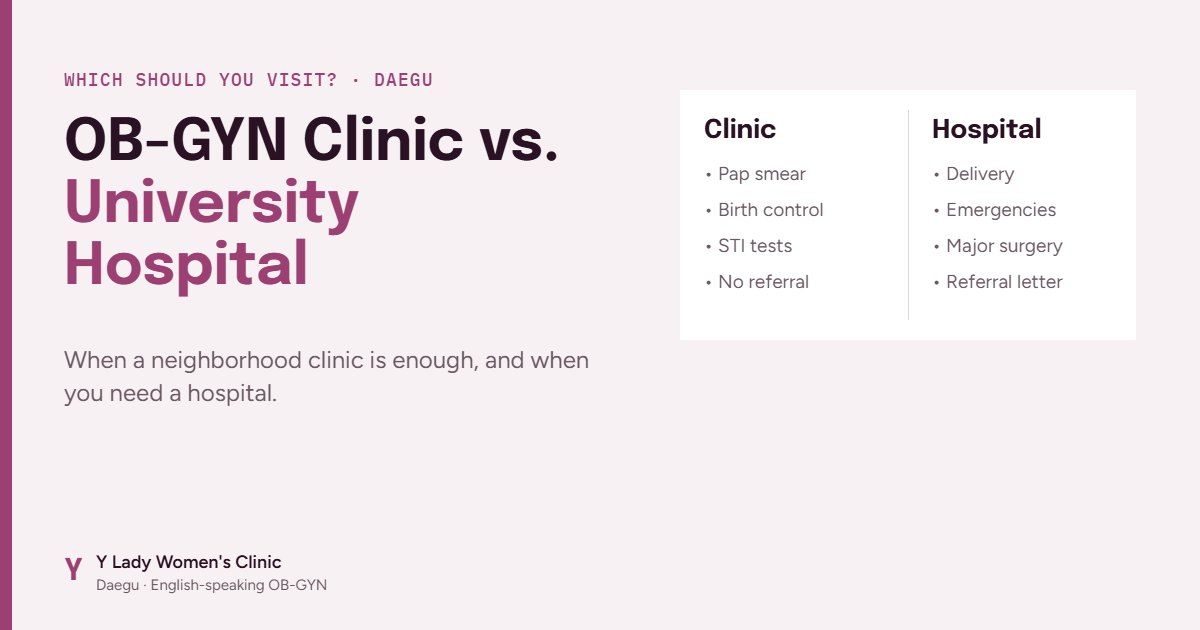
Do OB-GYN costs differ between clinics and hospitals in Korea?
Yes. The type of facility and whether you have a referral both affect what you pay.
- NHIS copay for covered outpatient care — Local clinic (의원): 30% (10% if pregnant); University (tertiary) hospital: Differs from clinic rates; ask the hospital
- Referral letter needed for NHIS rates? — Local clinic (의원): No; University (tertiary) hospital: Usually yes (진료의뢰서)
- Without a referral — Local clinic (의원): Not applicable; University (tertiary) hospital: You may pay more
- Best for — Local clinic (의원): Routine gynecology, screening, contraception, early pregnancy; University (tertiary) hospital: Complex surgery, high-risk pregnancy, cancer care, delivery
At tertiary hospitals (상급종합병원), patients generally need a referral letter from a clinic to be billed at NHIS rates. Starting with a gynecologist in Daegu at a local clinic is often the simplest path.
Is the HPV vaccine free for adults in Korea?
No. Adults generally pay out of pocket for the HPV vaccine, because it's a non-covered service. The National Immunization Program covers 12-year-old girls and, since May 2026, 12-year-old boys (Korea Biomedical Review).
See Gardasil 9 in Daegu for details.
How do I get receipts for private or travel insurance?
Ask for two documents when you pay: a receipt (영수증) and an itemized bill (진료비 세부내역서). Many insurers also want a diagnosis or doctor's note (소견서), so request it at the same visit.
Tips for smoother claims:
- Check your policy's claim requirements before your visit.
- Ask whether English versions are available.
- Pay first and claim afterward. Don't assume a Korean clinic can bill your foreign insurer directly.
- Keep copies of everything.
How do I get a cost estimate from an OB-GYN in Daegu?
The easiest way is to ask before your visit. At Y Lady, an English-speaking OB-GYN in Daegu, you can message on WhatsApp in English at +82-10-7776-1053.
- Describe your visit. Say what you need, for example a Pap smear, STI test, or IUD consultation.
- Share your insurance status. NHIS, pregnant with NHIS, private insurance only, or uninsured.
- Ask about non-covered items. Request the relevant items from the posted fee schedule.
- Confirm at the visit. The doctor may recommend different tests after the consultation, so ask again before extra services.
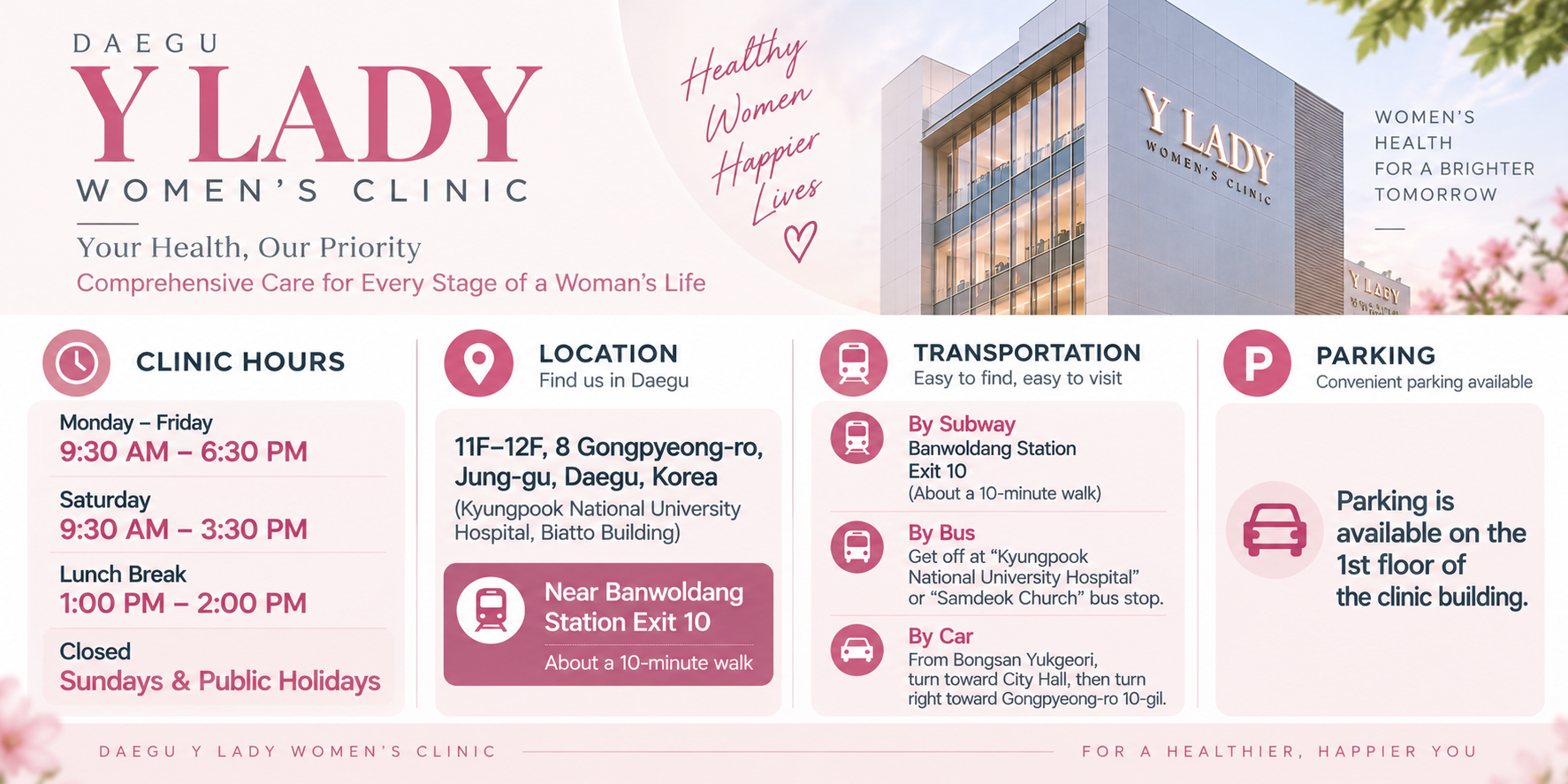
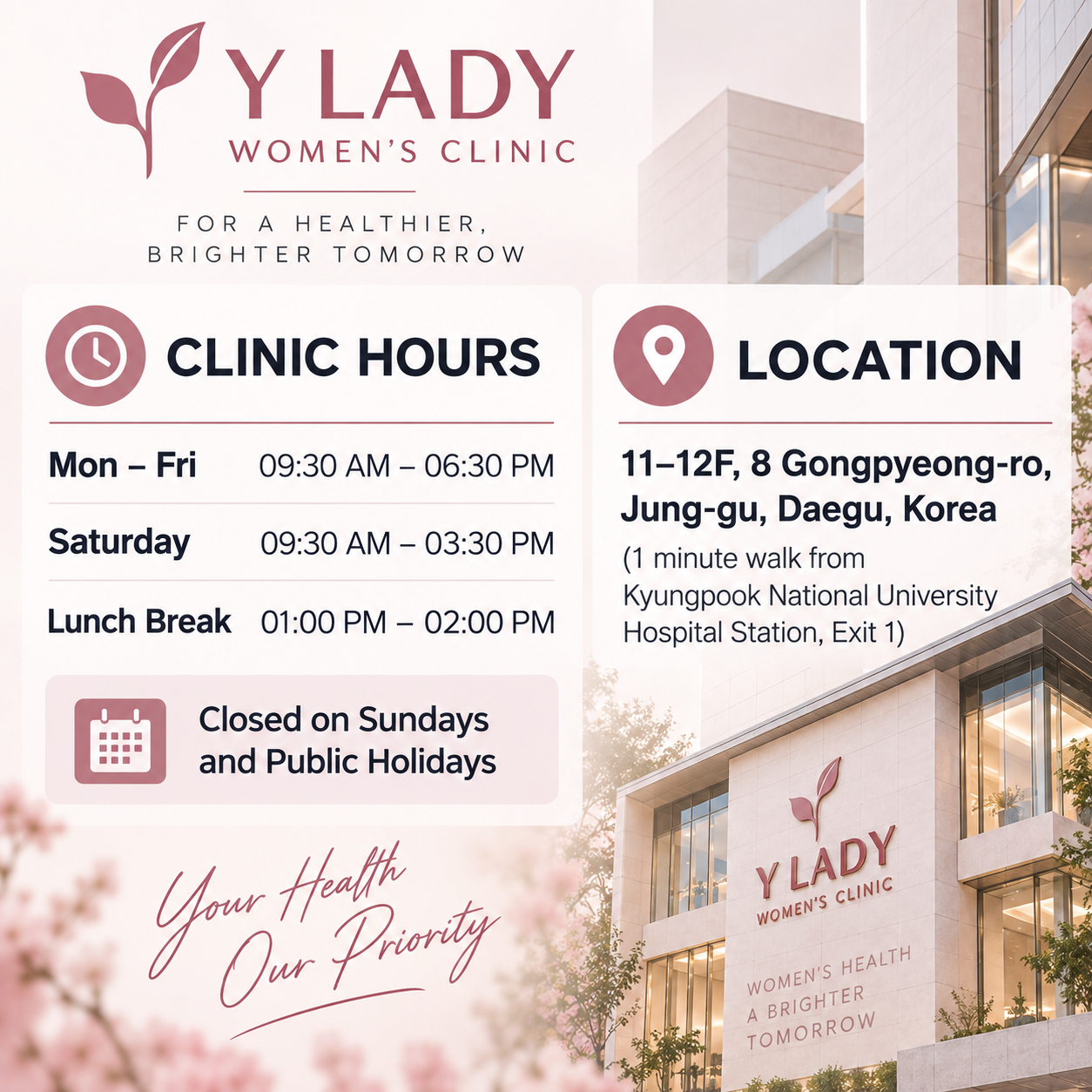
Clinic details: 2F, 11-1 Gongpyeong-ro 8-gil, Jung-gu, Daegu (대구광역시 중구 공평로8길 11-1 2층), near Kyungpook Nat'l Univ. Hospital Station (Line 3) and Banwoldang Station (Lines 1 and 2). Hours: Mon–Fri 09:30–18:30, Sat 09:30–15:30, closed Sundays and public holidays.
Frequently asked questions
How much does it cost to see a gynecologist in Korea?
It depends on your insurance and what you receive. With NHIS, you pay 30% of covered costs at a clinic, plus 100% of non-covered items. Ask the clinic for an estimate for your specific visit.
Can foreigners use NHIS at an OB-GYN clinic?
Yes, if you're enrolled. Most foreigners must live in Korea for at least 6 months before joining NHIS as regional subscribers, though workplace enrollees and some visa types are exceptions. Bring your ARC or passport.
Is the pregnancy voucher available to foreigners?
The voucher is for NHIS subscribers and dependents with a confirmed pregnancy. If you're enrolled in NHIS and pregnant, ask about applying for the National Happiness Card.
Why wasn't my visit covered by insurance?
Either the service was non-covered (비급여), your NHIS enrollment wasn't active, or your ID wasn't verified. If it was an ID issue, return within 14 days with ID and receipts to request a refund of the insured portion.
Do Korean clinics bill foreign insurance directly?
Don't assume so. Most patients pay at the clinic and then claim reimbursement with a receipt, itemized bill, and doctor's note.
Where can I see the clinic's prices?
Korean clinics post a non-covered fee schedule (비급여수가표). Ask the front desk to show you the relevant items, or message the clinic before your visit.
Key takeaways
- OB-GYN visit costs in Korea depend on covered vs. non-covered (비급여) services and your insurance status.
- With NHIS, you pay 30% of covered costs at a clinic, or 10% if you're pregnant; non-covered items are 100%.
- Without NHIS, including most foreigners in their first 6 months, you pay full price.
- Cervical cancer screening is free for NHIS-eligible women 20+ every 2 years.
- The pregnancy voucher is KRW 1,000,000 per single pregnancy (KRW 1,400,000 for multiples).
- Always ask for an estimate, and collect a receipt and itemized bill for private insurance.
Have a cost question?
If you want to know what your visit may involve before you come in, message Y Lady Women's Clinic, an OB-GYN for foreigners in Daegu, on WhatsApp. We reply within 24 hours, except Sundays and holidays.
Sources