Birth Control in Korea: A Foreigner's Guide to Contraception in Daegu
Pills, IUDs, implants and emergency contraception, and which need a prescription
Medically reviewed by Dr. Yeo Jun-young, MD, PhD, board-certified OB-GYN · Last updated September 2026
Birth control in Korea works a little differently from what many expats are used to. This guide explains which pills you can buy at a pharmacy, what needs a prescription, how emergency contraception works, and how to find a Korean version of your home brand.
Quick answer In Korea, some low-dose combined birth control pills are sold over the counter at pharmacies, while others, such as Yaz and Yasmin, need a prescription. Emergency contraception always requires a doctor's prescription, so act fast. Long-acting options, including hormonal and copper IUDs, the Implanon implant, and injections, are available at OB-GYN clinics. To replace your home brand, match the active ingredients.
Can I buy birth control pills over the counter in Korea?
Yes, some. Certain low-dose combined oral contraceptives, such as Mercilon and Meliane, are sold at Korean pharmacies without a prescription. Other pills, including Yaz and Yasmin, require a doctor's prescription.
A combined pill contains two hormones, an estrogen and a progestin. The difference between over-the-counter (OTC) and prescription pills in Korea depends on the specific product, not on how "strong" it feels.
OTC vs. prescription pills at a glance
- Where to get — OTC pills (e.g., Mercilon, Meliane): Any pharmacy (약국); Prescription pills (e.g., Yaz, Yasmin): Doctor's prescription, then pharmacy
- Doctor visit needed — OTC pills (e.g., Mercilon, Meliane): No; Prescription pills (e.g., Yaz, Yasmin): Yes
- Who it suits — OTC pills (e.g., Mercilon, Meliane): Healthy users happy with a common formula; Prescription pills (e.g., Yaz, Yasmin): Those needing a specific formula or medical advice
Even for OTC pills, a check-up is worth considering if you smoke, have migraines, have high blood pressure, or have a history of blood clots. These can affect whether estrogen-containing pills are right for you.
Do I need a prescription for the morning-after pill in Korea?
Yes. Emergency contraception requires a doctor's prescription in Korea. You cannot buy it directly at a pharmacy, so contact a clinic as soon as possible.
Timing matters. Emergency contraceptive pills work best when taken early:
- Levonorgestrel pills: generally used up to 72 hours after unprotected sex.
- Ulipristal acetate pills: can be used up to 120 hours (5 days); the World Health Organization (WHO) notes they are more effective than other pills between 72 and 120 hours.
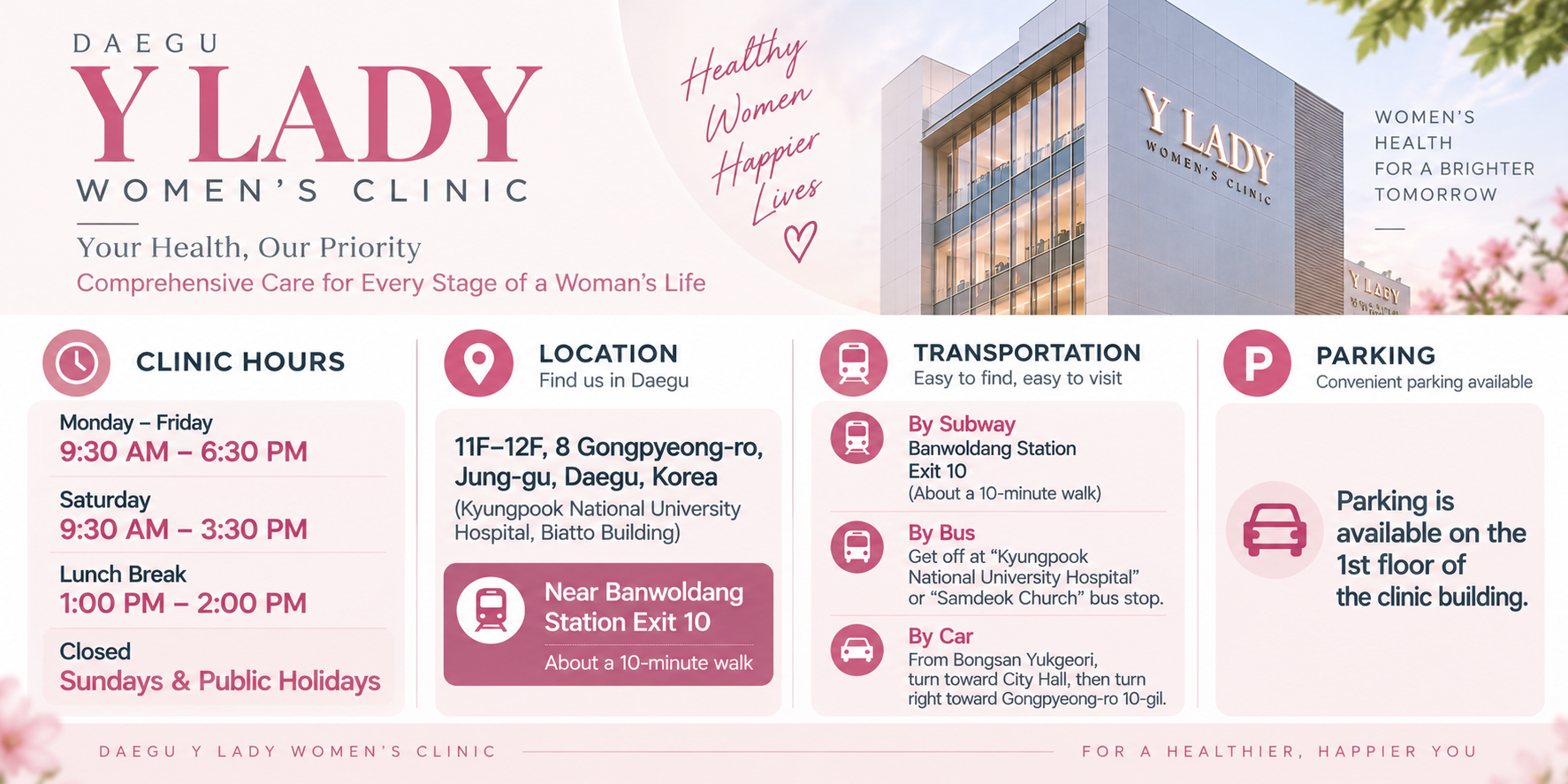
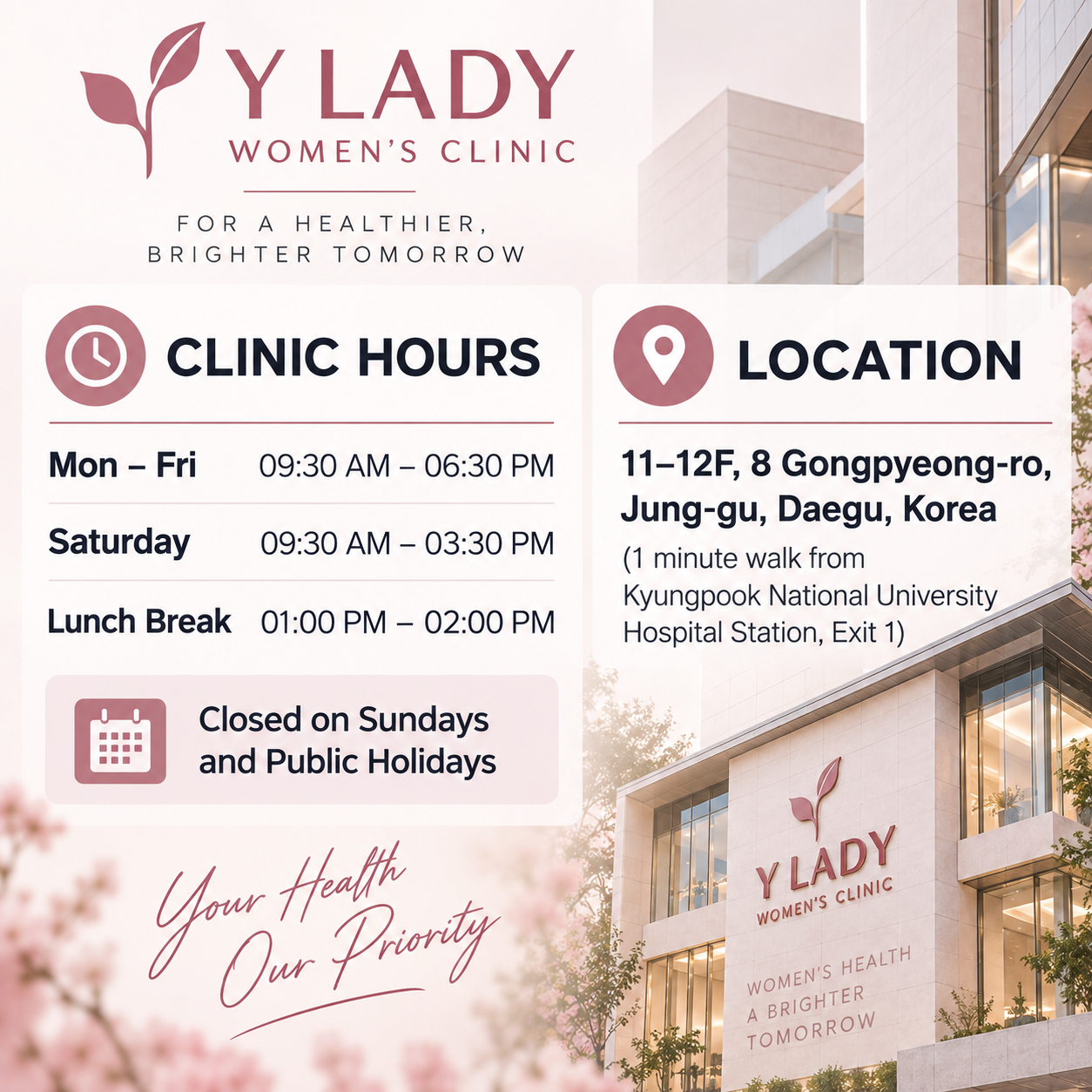
If it is a weekend or holiday, plan ahead. Y Lady is open Saturdays 09:30–15:30 but closed on Sundays and public holidays. See our emergency birth control page for details.
Can a copper IUD be used as emergency contraception?
Yes. A copper IUD inserted within 5 days of unprotected sex can serve as emergency contraception. WHO reports it is more than 99% effective when inserted within 120 hours, and it can then stay in place as ongoing birth control.
What birth control options are available at OB-GYN clinics in Korea?
Korean OB-GYN clinics offer most modern methods, including hormonal and copper IUDs, the Implanon implant, and progestin injections. Tubal ligation, a permanent option, is also available through gynecologists.
Hormonal IUD
A hormonal IUD is a small T-shaped device that releases a progestin inside the uterus. According to the U.S. Centers for Disease Control and Prevention (CDC), it lasts up to 3 to 8 years, depending on the device.
Copper IUD
A copper IUD is a hormone-free device placed in the uterus. The CDC says it can stay in place for up to 10 years.
Implanon (implant)
Implanon is a small rod placed under the skin of the upper arm that releases a progestin. The CDC notes an implant releases hormone over 3 years. See Implanon in Daegu.
Birth control injection
The injection is a progestin shot given every three months, per the CDC. You need to return to the clinic on schedule.
Tubal ligation
Tubal ligation is a surgical procedure that is intended to be permanent. It suits women who are certain they do not want future pregnancies. Talk it through with your doctor first.
Condoms
Condoms are sold at pharmacies and convenience stores across Korea without a prescription. They are the only method on this list that also helps protect against sexually transmitted infections (STIs).
Which birth control method is most effective?
Long-acting methods such as the implant and IUDs have the lowest typical-use failure rates. "Typical use" reflects real life, including missed pills or late injections, according to the CDC.
- Implant (Implanon) — How long it lasts: Up to 3 years; Prescription or clinic visit in Korea?: Clinic visit; Typical-use failure rate (CDC): 0.1%
- Hormonal IUD — How long it lasts: 3–8 years, by device; Prescription or clinic visit in Korea?: Clinic visit; Typical-use failure rate (CDC): 0.1–0.4%
- Copper IUD — How long it lasts: Up to 10 years; Prescription or clinic visit in Korea?: Clinic visit; Typical-use failure rate (CDC): 0.8%
- Tubal ligation — How long it lasts: Permanent; Prescription or clinic visit in Korea?: Surgery; Typical-use failure rate (CDC): 0.5%
- Injection — How long it lasts: Every 3 months; Prescription or clinic visit in Korea?: Clinic visit; Typical-use failure rate (CDC): 4%
- Combined pill — How long it lasts: Daily; Prescription or clinic visit in Korea?: Some OTC, some prescription; Typical-use failure rate (CDC): 7%
- Male condom — How long it lasts: Each use; Prescription or clinic visit in Korea?: No; Typical-use failure rate (CDC): 13%
The failure rate is the percentage of women who experience an unintended pregnancy during the first year of typical use. The right choice also depends on your health, plans, and how long you will stay in Korea.
How do I find my home brand of birth control in Korea?
Match the active ingredients and their doses, not the brand name. The same formula is often sold under a different name in Korea, so take your old pill pack or prescription to a pharmacist or doctor.
Follow these steps:
- Find your ingredients. Check the box or leaflet for the estrogen (often ethinylestradiol) and the progestin (for example, levonorgestrel, desogestrel, or drospirenone), plus the doses.
- Photograph the pack. A clear photo of the ingredient list is easier to show than to explain.
- Ask a pharmacist. They can tell you whether a Korean product has the same ingredients and whether it is OTC.
- See a doctor if needed. If no OTC match exists, a gynecologist in Daegu can prescribe an equivalent.
- Ask about switching. If you change formulas, ask how to switch without a gap in protection.
If you are arriving soon, bringing a few months' supply from home gives you time to sort this out.
How much does birth control cost in Korea, and does NHIS cover it?
Costs vary by method and clinic, so ask for an estimate before your visit. Some contraception services may be non-covered (비급여), meaning you pay the full cost yourself even if you are enrolled in the National Health Insurance Service (NHIS).
A few points help you plan:
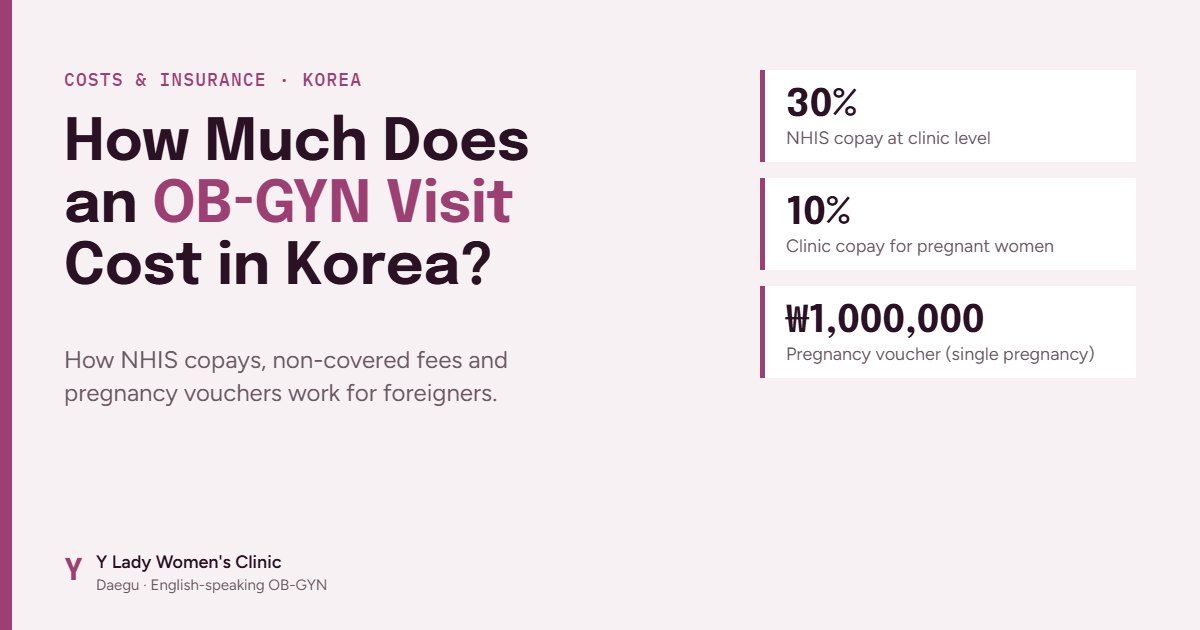
- Covered vs. non-covered: For NHIS-covered care at a clinic (의원), patients generally pay a 30% copay. Non-covered services are paid 100% by the patient.
- Consultation: Whether your visit is covered depends on the reason for the visit. Ask the front desk.
- Receipts: Request an itemized receipt (진료비 세부내역서) if you plan to claim with private or overseas insurance.
Since April 3, 2024, most foreigners who are not employed in Korea must live here for at least 6 months before joining NHIS. Employees are usually enrolled through their workplace.
How do I get birth control from an English-speaking OB-GYN in Daegu?
The easiest way is to message the clinic in English first. At Y Lady Women's Clinic, an OB-GYN for foreigners in Jung-gu, you can text us on WhatsApp at +82-10-7776-1053. Online inquiries are answered within 24 hours, except Sundays and holidays.
What to include in your message:
- The method you are interested in, or "not sure yet"
- Your current or previous brand, with a photo of the pack
- Whether it is urgent (for example, emergency contraception)
- Whether you have NHIS
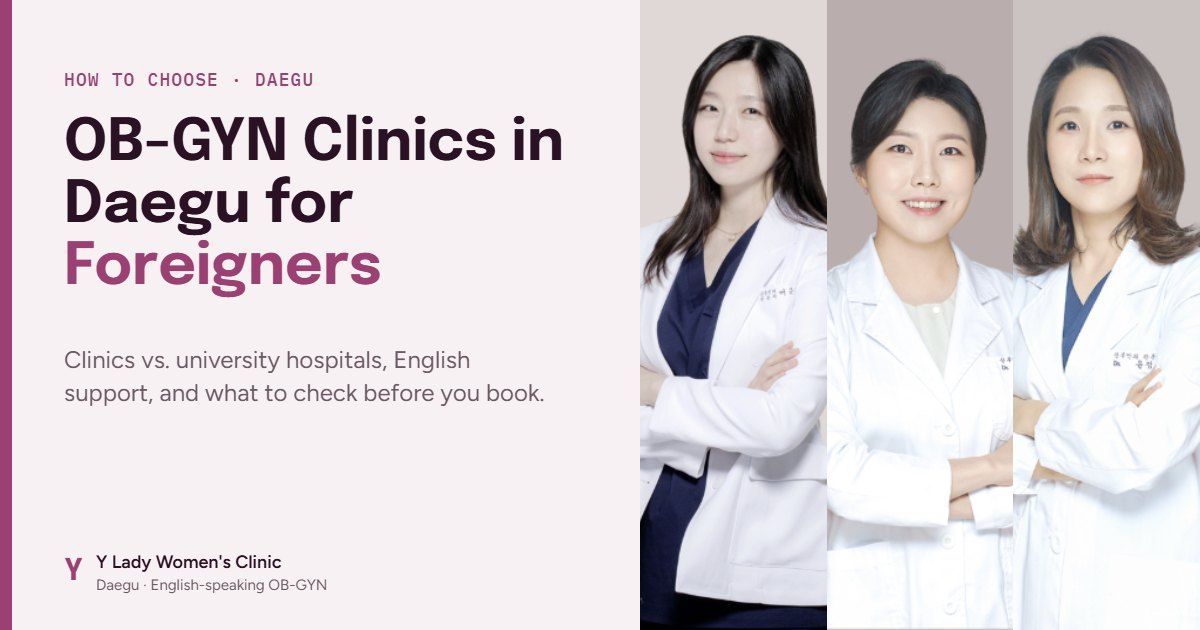
What to bring: your Alien Registration Card (ARC) or passport and a list of your medications. Our three doctors are female, board-certified OB-GYNs.
Getting to the clinic
Y Lady is at 2F, 11-1 Gongpyeong-ro 8-gil, Jung-gu, Daegu, opposite Samdeok Fire Station. For taxis, show: 대구광역시 중구 공평로8길 11-1 2층. The nearest metro stops are Kyungpook Nat'l Univ. Hospital Station (Line 3) and Banwoldang Station (Lines 1 & 2).
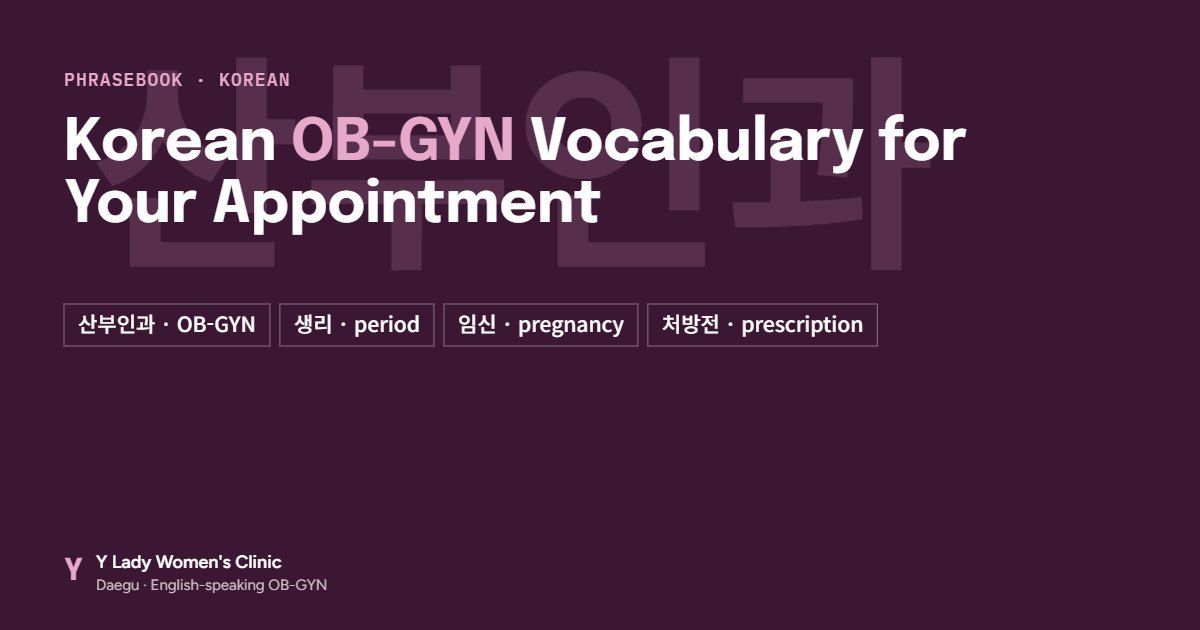
Korean words to know
- Birth control pill — Korean: 피임약
- Emergency contraception — Korean: 응급피임약
- Prescription — Korean: 처방전
- Pharmacy — Korean: 약국
Frequently asked questions
Is birth control legal and easy to get in Korea?
Yes. Contraception is legal and widely available. Some pills are sold over the counter, while IUDs, implants, injections, and emergency contraception require a clinic visit or prescription.
Can I get the morning-after pill at a pharmacy in Korea?
Not without a prescription. You need to see a doctor first, then fill the prescription at a pharmacy. Go as soon as possible, because the pills work best when taken early.
What if I need emergency contraception on a Sunday?
Many clinics, including Y Lady, are closed on Sundays and public holidays. Look for an open clinic or a hospital emergency room, and remember that ulipristal pills and a copper IUD can work up to 5 days after unprotected sex.
Can I get an IUD inserted as a foreigner?
Yes. IUD insertion is an outpatient procedure available to foreigners at OB-GYN clinics. Learn more about IUD insertion and removal in Daegu.
Can I remove an IUD or implant in Korea that was placed at home?
Yes. A gynecologist can remove or replace an IUD or implant placed in another country. Bring any records you have about the device type and insertion date.
Is Yaz available in Korea?
Yes, but it requires a prescription. Book a consultation, and the doctor can prescribe it or a suitable alternative.
Do Korean pharmacists speak English?
Some do, but it varies. Showing a photo of your pill pack's ingredient list is the most reliable way to communicate.
Key takeaways
- Some combined pills (e.g., Mercilon, Meliane) are OTC in Korea; others (e.g., Yaz, Yasmin) need a prescription.
- Emergency contraception requires a prescription, so contact a clinic as soon as possible.
- A copper IUD inserted within 5 days is a highly effective emergency option and ongoing birth control.
- IUDs and the implant have the lowest typical-use failure rates, per the CDC.
- To replace your home brand, match the active ingredients and doses.
- Some contraception services may be non-covered; ask for an estimate first.
Talk to us about birth control in Daegu
If you are not sure which method fits your life in Korea, a short consultation can help. Message us on WhatsApp or read more about birth control counseling in Daegu.
Sources